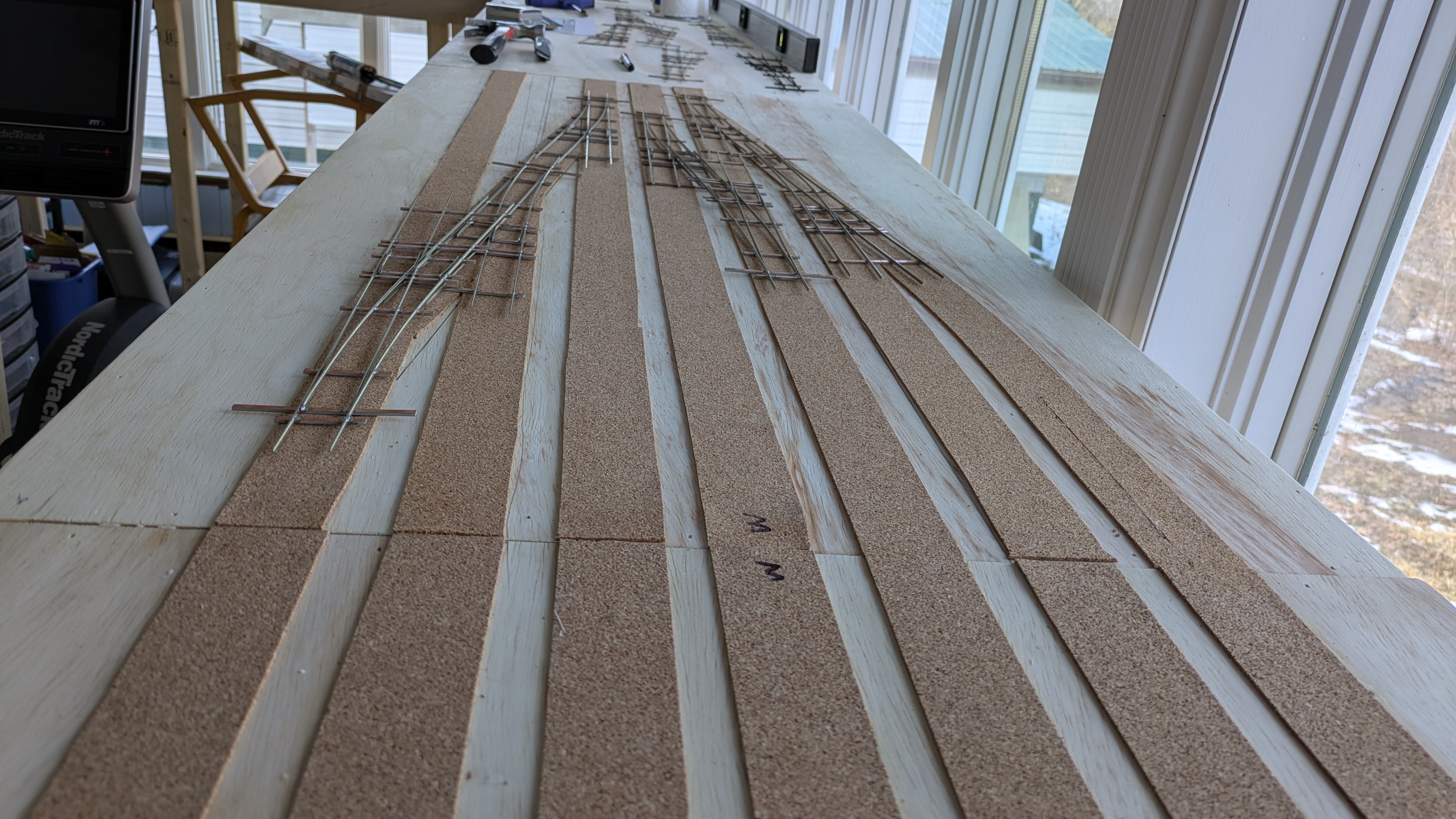
March 1st marked yet another major turning point for the Cedar River Valley: the day the C&NW Yard finally began taking physical shape. After weeks of leveling modules, installing wiring, and confirming alignment across all twelve sections, the focus shifted from carpentry to trackwork—the moment every modeler looks forward to. With the full yard footprint now accessible and stable, I began laying out all seven yard tracks, starting with the ladder and working outward. Seeing the geometry of the yard emerge on the plywood surface brought the project into a new phase, transforming the space from a collection of modules into the beginnings of a functioning railroad.
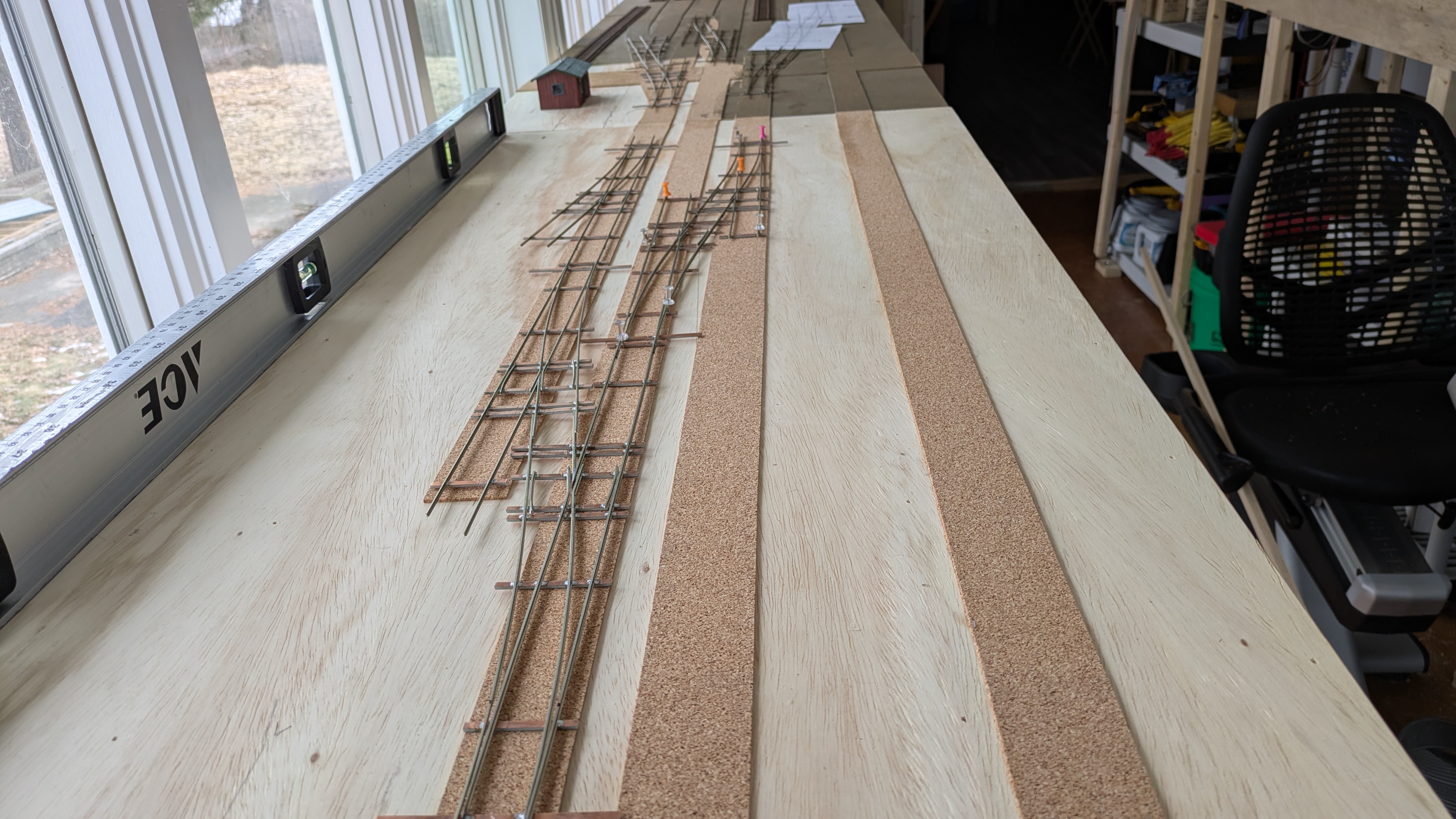
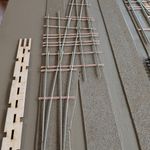
The second custom piece was the wye leading into the engine shop. This wye is a defining feature of the yard, providing access to the locomotive servicing area and giving the engine facility its distinctive operational character. Because the prototype’s geometry didn’t translate cleanly into the modular footprint, the wye had to be built from scratch to achieve the right curvature and clearances. Crafting it by hand allowed the engine shop lead to flow naturally from the yard ladder, preserving the feel of the real C&NW facility while adapting it to the layout’s space.
By the end of the day, the yard’s backbone was firmly established. The seven tracks stretched out in clean, parallel lines, the custom turnouts sat precisely where they needed to be, and the engine shop wye gave the yard its first hint of operational personality. March 1st wasn’t just another work session—it was the moment the Cedar River Valley began to look and feel like a railroad. With the yard now taking shape, the next steps will bring even more life to the layout as rail is spiked, feeders are added, and the first trains begin to test the new trackage.