Zone 2 - River Rail Industrial District
Zone 2 represents the industrial heart of the Cedar River Valley, a dense cluster of rail‑served customers that forms the core of the layout’s switching activity. Set in 1968 and modeled in S scale, this district captures the gritty, workaday character of the Chicago & North Western’s urban industrial trackage in La Crosse. The design emphasizes tight clearances, varied spotting locations, and the kind of purposeful complexity that defined real Midwestern switching districts of the era.
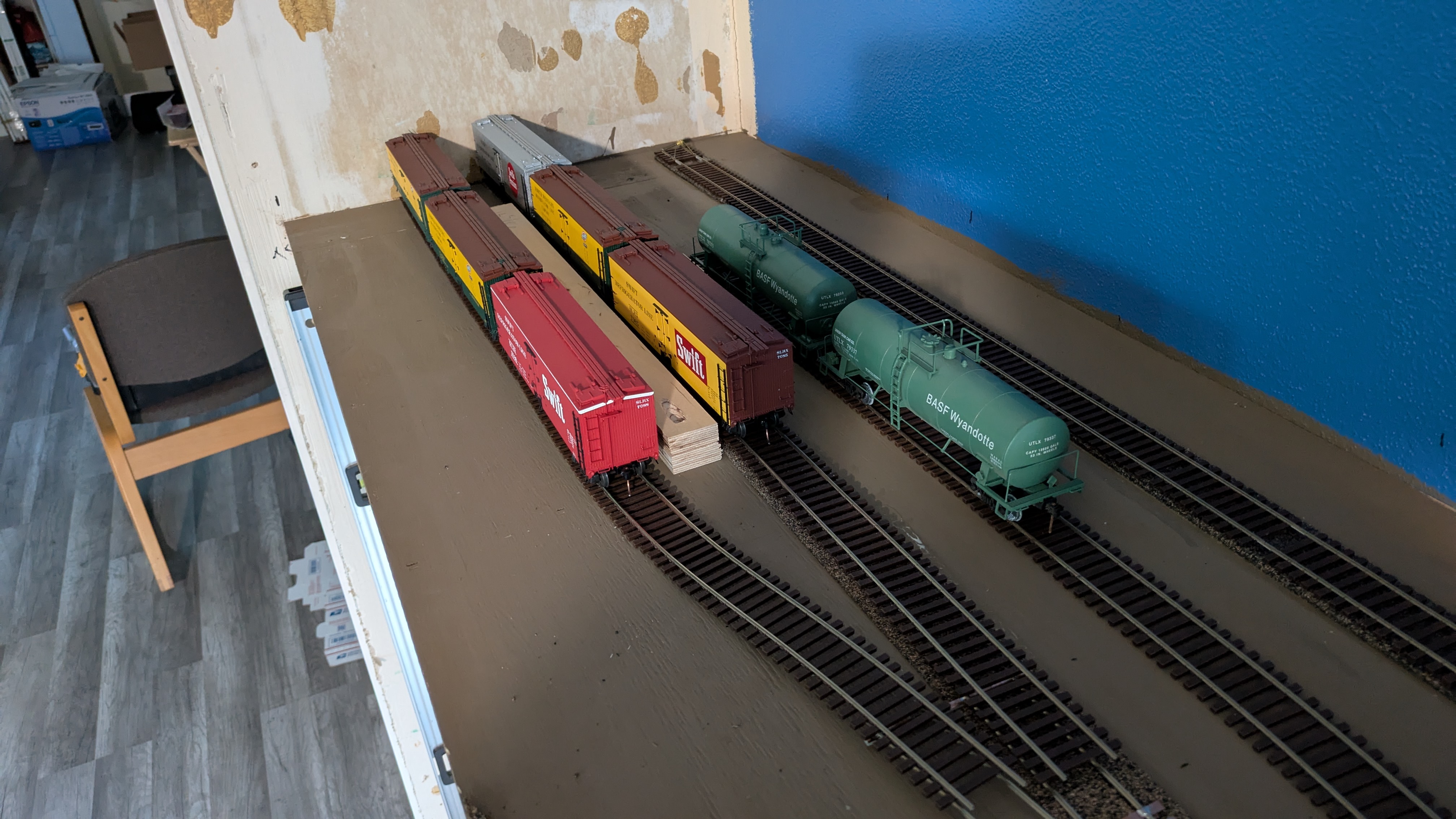
Construction of Zone 2 began with careful planning of the track geometry to ensure that each industry received the correct number of spots, sidings, and access points. Because the district is operationally intense, turnout placement, lead lengths, and switching flow were all refined early in the build. Benchwork and subroadbed were shaped around the industries themselves, allowing the trackage to feel organically integrated into the urban environment rather than simply laid on top of it.
As the module developed, structure mock‑ups played a crucial role in shaping the district’s character. Temporary building forms helped establish the massing of warehouses, cold‑storage facilities, and service structures, ensuring that each industry fit naturally within the available space. This iterative approach allowed the scene to evolve with a realistic sense of density, where buildings, pavement, and trackage interact the way they would in a real 1960s industrial zone.
Scenery in Zone 2 focuses on the layered textures of an active industrial district—weathered pavement, loading docks, alleyways, utility poles, and the subtle grime that accumulates around rail‑served facilities. Each scenic decision reinforces the operational purpose of the district, creating a believable environment where boxcars, reefers, and hoppers move through tight spaces to reach their assigned spots. The result is a scene that feels alive with the daily work of switching and industry.
A defining feature of Zone 2 is that every industry is named after members of the River Rail Operations group, honoring the people whose ideas, feedback, and enthusiasm helped shape your approach to realistic operations. This tribute adds a personal dimension to the district, connecting the layout’s design to the community that influenced it. As with all zones, Zone 2 is the work of a single builder, reflecting the project’s commitment to prototype‑inspired design, operational depth, and a cohesive vision of 1968 C&NW railroading.